Small Spaces
Make a Utility Closet Easy to Use From the Doorway
Give brooms, a vacuum, and cleaning supplies a reliable home while keeping service space and hazardous items appropriately clear.
The most important dimension in a utility closet is often the space behind the door when it is open. A broom can fit the height of the closet easily and still have to travel diagonally into the hallway before you can lift it off its hook. The vacuum that parks neatly below a shelf may be difficult to retrieve once its attachments and a laundry basket have followed it in. Design around these movements. Give the largest item the simplest way out and use the leftover pockets for the smaller things that can be taken with one hand.
Work out what kind of closet you have first
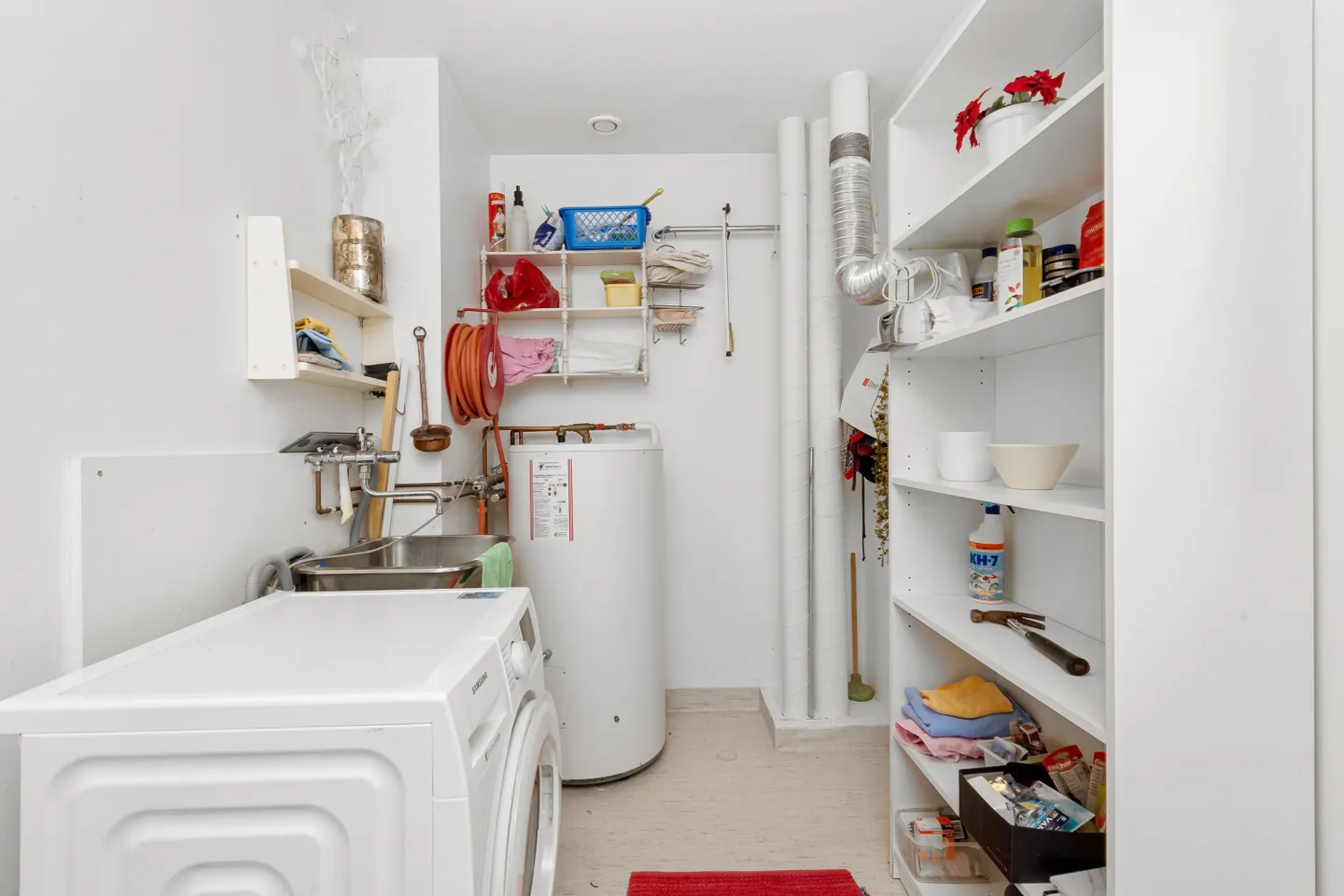
An ordinary storage cupboard can be measured as available space. A closet containing heating equipment, a water heater, electrical equipment, ventilation, supply controls, or similar services has restrictions that come before storage. Identify equipment, required clearances, air openings, vent routes, and locations that need to be accessible for inspection and service. Use the equipment instructions and ask the appropriate technician or building manager to clarify what can share the room. Some enclosures should remain entirely clear of storage. Avoid placing shelves, containers, or flammable materials where they obstruct equipment or access.
If the space contains a fuel-burning appliance, have a qualified professional confirm what the installation needs, especially if a new storage arrangement would affect ventilation or clearances. The U.S. CPSC's indoor air guidance discusses proper venting and adequate supply air for combustion equipment. Keep those requirements separate from the decisions about vacuum attachments and spare towels. Sometimes the most useful improvement is moving daily supplies to a separate narrow cupboard and creating a clear record of the original closet's function so no one tries to fill it again.
Where the allowed storage area shares a larger space with laundry, inspect the actual appliance instructions as well. A door may need to stand open for certain access, a lint filter has to come out in one direction, and hoses or cords must remain clear and accessible. Add the space people need to approach the equipment and any area an appliance needs to move through for maintenance or replacement. Portable cleaning tools can live elsewhere if they repeatedly end up on a machine that has to be opened or reached. A closet you can service easily has more practical value than a fully packed wall of storage.
Measure the doorway, ceiling and projecting features
Record clear width with the door at its usual open angle, the depth at each side, and the lowest limit on vertical storage. An inward door or broad handle occupies a different footprint from sliding or folding doors. A sliding opening might only reveal half of a broad closet at once. Place the objects you use on each side where they can come out independently, and plan a deeper reachable shelf for lightweight spare items. A narrow opening makes low sideways movement harder than a quick forward pull. Take a picture of the closet with its door open and mark the projections you can feel but barely see.
Bring the vacuum to the closet while attached to its usual head and hose or tube. Measure it at full usable height and width, then see how its handle goes through the opening. Check the step up if the closet floor or sill is raised. Observe the path your hand needs for a grip, including whether you have to bend or twist. Rehearse moving it out after a hand-held broom or basket is set in the obvious adjacent spot. The best parking space is the one that still works on cleaning day when half of what the closet holds is about to come out.
Give long-handled tools enough clearance to meet their hooks
Hold a short mop, long broom and dustpan vertically along the proposed wall. Try taking them down with the door in its ordinary position. A simple grip holder needs clearance around the handle to release it; a hook may require lifting the tool a few inches before it comes free. The head of a wide broom is part of the spacing calculation. Mounting it high can clear the floor, but the release point still needs to be comfortably reachable for the people using it. Verify that holder, support and wall attachment suit the tool. Check for pipe or wiring locations before installing hardware.
Put the tools in order by the way they leave the cupboard. The regular broom can go closest to the opening, and the seldom-used extension duster can go farther back. A hook holding several objects often puts the one you want between two others. Try small gaps between tools and use a photo of the wall after resetting to establish which slots are obvious. A long group of clips sometimes needs only three useful slots. Save whatever wall remains for shorter equipment or for elbow room. Wide floor heads can be arranged on staggered levels if each tool still lifts cleanly out.
Give damp tools a suitable drying place. A mop head that can be removed and cleaned should be handled as its instructions specify and allowed to dry under appropriate conditions. Find the path to the sink or laundry area without dripping over other supplies. Avoid storing damp materials in a tight enclosure that holds moisture. A cleanable tray can protect a suitable floor when it is correct for that use and easy to lift. It should be positioned where nobody must step over its raised edge while pulling out a vacuum. Review the usual putting-away routine, since storage that only suits dry spotless tools may be hard to maintain.
Design the shelves by weight and frequency
Place larger refill bottles, vacuum accessory bags, and packages on a table and group them by function. Pick one small caddy for items often carried together and choose a shelf at easy reach. Keep the loads within the shelving and attachment limits. Reserve upper shelves for lightweight items that will not need regular lifting. A wide shelf with a heavy container at its back can be awkward even if the shelf has the rated capacity to hold it. Divide frequently used items from sealed spares so you can see both. Give extra bags or folded cloths a position that will stay identifiable as quantities change.
Follow safe storage directions for each cleaning product. Keep chemicals in their original labeled containers and securely away from children and pets, as directed by the label. Where a cupboard needs a child-resistant arrangement, verify how that works when the door is in normal use. Avoid organizing unlabeled liquids into matching bottles. A small controlled storage area for hazardous products can make the rest of the closet easier to keep visible. Keep household cloths from being put away with spills on them, and provide a reachable place for the items that are appropriate to handle independently.
Make shelves easy to read from the doorway. Shelves holding slim supplies can be shallower than a broad shelf above a vacuum. In a closet with a deep side wall, one narrow side shelf can let a person see labels without reaching around a front row. Tape a paper rectangle at the actual projection and turn in front of it. Large bins can help remove light supplies as a group if their handles still work and the door clears them. Lower an opaque bin into its retrieval position before deciding whether to use it high up. You should be able to see or feel what is in it safely.
Decide where equipment goes after use
An upright vacuum may be happiest where the hose can remain attached and its full footprint is stable. A cordless unit with a wall dock changes the mounting and power requirements. Follow the manufacturer's installation and charging directions, choose the location with suitable air clearance and access, and keep charging accessories out of the walk path. Ask a qualified electrician or the building manager if the outlet position needs to change. Don't run a fixed charging arrangement under a door just because it closes loosely over a cord. A different docking location can make the whole work area safer and easier to clean.
If a canister vacuum tends to end up in a coil, use a simple compatible way of collecting its hose where it stays within the outline. Check the bend radius and attachment details in the instructions. Small tools are easiest to find near the unit or in a shallow holder in order of use. Put the piece you reach for mid-task on top. Change how tools are stored if somebody needs to move their whole collection each time they return one. The moment after finishing a chore is when the worst arrangement tends to show itself. It should be possible to put the equipment away when you are tired.
Check the arrangement during the least tidy version of a chore
Bring in a full laundry basket, take out the main cleaning tool, and then put both away. Move the largest consumable from its shelf, and open the door as much as it usually opens. Use the storage at night and check if you can distinguish the lowest bracket or the edge of a container. Try a different shelf or hook height where both a tall and a shorter household member regularly use the space. Places that work during a neat sorting session may need a little extra headroom in an actual hurry.
Draw one short record of what's intentionally stored and what is supposed to stay clear. Mark service needs where a household member or visitor handling the equipment can see them. If a new device arrives, try its open and closed positions before treating it as something that will certainly fit. A useful closet ends a chore with a few uncomplicated movements: a broad head slides through the door, a cleaning cloth goes into the right basket, and nobody has to move ordinary supplies to get at a shutoff.