Materials
How to Care for Wood Furniture Finishes
Maintain an everyday wooden tabletop by identifying its finish, cleaning gently and knowing when a mark calls for repair or conservation.
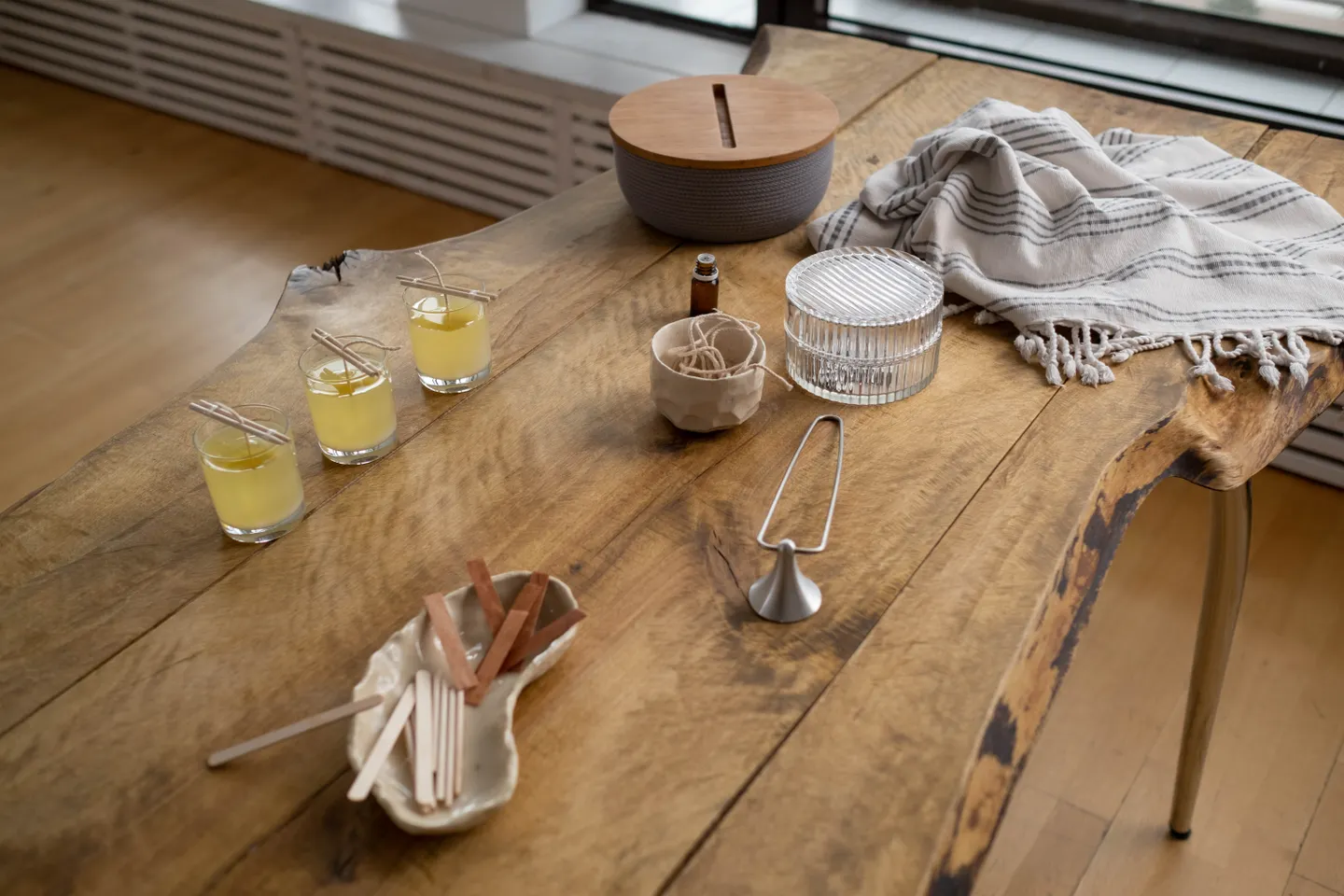
Care for the finish that is on the furniture today. Two wood tables of the same color can require different maintenance if one is protected by a varnish film and the other has a thin penetrating finish. An antique may have several earlier treatments under its current sheen. Start by finding the maker's care instructions, then use routine dusting and spill control while you investigate any marks. The condition of the finish and its known maintenance needs should determine what you reach for next.
Identify what is known and what is guessed
Check the original label, the maker's notes and anything supplied with the piece. A table described as oak might be solid oak, oak veneer over another material or another wood stained to look similar. Those differences matter if restoration involves a worn edge or an area of exposed wood. The finish name can also be broad. An oiled surface could have been treated with a particular drying oil, an oil and wax blend or a factory product whose maintenance requires its own cleaner. A matte varnish may look like lightly finished wood in the room.
Look across the surface from a low angle in diffuse light. A film finish often appears to lie across the grain, while a thinner penetrating treatment may show more variation. Reflections tell you how light moves over the surface but do not reliably identify the chemistry. A dark spot on a used table can be a feature in the wood, an old stain, uneven wear or a patch from a previous repair. Compare it with the underside or a spare leaf without using that comparison to guess what solvent is safe.
Take photographs and note the first time you saw the mark before a repair changes it. If you bought the piece from a dealer, ask whether the surface was refinished or polished recently. If a family member has taken care of it for years, find out what products they used and which surfaces behaved differently. Keep any known product or finish name with those notes. The USDA Forest Products Laboratory Wood Handbook explains what finishes do for wood and why protection, appearance and ease of cleaning are distinct properties.
Keep ordinary cleaning gentle
For a sound surface with an unknown finish, the safest starting point is usually a clean, soft, dry cloth used to lift loose dust. Shake out or replace it often enough to avoid dragging grit along the surface. A clean soft brush can help near carved details, provided the finish is secure. Be careful with corners, old labels and raised coating that might snag. If a finish is loose, powders off or appears to have pigment coming off, stop and get knowledgeable advice before applying pressure or introducing moisture.
Follow the maker's directions for a known finish. On an intact washable surface, instructions may allow a cloth only lightly dampened with a recommended solution, followed by drying. Avoid leaving water at edges, around hardware and in joints. Pouring cleaning liquid directly on the table makes it hard to limit where it goes. A separate dry cloth is convenient if you need to take up traces of moisture immediately. If the cloth changes color or the surface looks different once it dries, stop and investigate before treating the rest of it.
A finish may be affected by ordinary cleaners. Alcohol, ammonia, abrasive materials, strong degreasers and all-purpose products that leave a film can change gloss or soften some coatings. A formula labelled wood-safe is not necessarily suitable for an unknown antique or for a particular modern coating. Check the care instructions and spot-test an approved product discreetly if the maker advises it. In an occasional kitchen spill, absorb the liquid promptly. Scrubbing a sticky patch aggressively can make a larger dull spot than the original spill.
Protect the parts used most
Place a stable coaster beneath a glass and use protection designed for the temperature of a serving dish. Put a clean surface under projects with glue, sharp tools or pigment. Wipe under water-catching objects such as plant saucers, and avoid placing an unlined plant container on a wooden surface. Small felt pads suited to the furniture can help keep lamps or trays from wearing a ring into the coating. Lift those objects to move them. A soft pad can still grind dirt into the finish if you push it repeatedly across the table.
Compare two types of wear you can prevent. A family table may have a few spots where mugs repeatedly sit and where the middle stays protected by a light mat. A writing desk may show polished areas at the front where wrists and sleeves rub. Change the routine where it is causing damage. Give a weekday mug a permanent coaster and use a suitable loose writing mat where a desk gets repeated contact. Check that any mat or rubber pad is compatible with the finish and allows you to notice spills and moisture underneath.
Keep wooden furniture away from sustained temperature extremes, leaks and recurring direct heat where possible. Direct sun can change the appearance of wood and finishes. A small table near a bright window may eventually have a lighter or darker patch where a tray sat. Moving the tray will not immediately make the color even. Draw a shade during the strongest light if protecting the look is important to you. If a room has very dry and damp seasons, pay attention to the room conditions and the movement of joints. Adding a polish will not stabilize humidity.
Use maintenance products only when the finish calls for them
Some known oil or hardwax oil systems specify an additional maintenance coat after wear and have explicit preparation instructions. A finish that forms an intact film may instead need ordinary cleaning and protection. Putting oil over a coated surface can leave residue or complicate future repair. Overpolishing can build up waxes or silicones near cracks and decorative details. The Canadian Conservation Institute's guidance on furniture finishes explains why museum furniture calls for caution with commercial polish and restoration mixtures.
On a modern surface, check whether the maker gives a condition for refreshing it rather than a fixed calendar date. A softly worn spot can need different treatment from a surface whose coating is already flaking. Ask if you should prepare a full panel or if a small patch will blend with the surrounding finish. Save instructions for care, application, ventilation and safe handling and disposal of used cloths for any product you apply. Oil-wet or solvent-contaminated cloths can require special handling. Follow the product and local disposal instructions rather than leaving them in a pile.
Examine the table edges and the leaf or extension mechanism before treating the top as one surface. On a used table, the leaf may look different simply because it has spent most of the year out of light. Stripping the top to make it match is a much bigger choice than cleaning both parts and accepting a mild difference. Check whether a projecting trim edge is a separate finish or material. Around a seam or hinge, keep cleaning cloths from catching and avoid leaving a liquid where it can collect. Retain the label on a spare leaf so that a later maintainer has another clue about the original maker.
Kitchen surfaces intended for direct food use and decorative furniture can have different requirements. Keep the instructions for the product's intended use available, and use a suitable cutting surface to protect the table. A maintenance product sold for dining furniture may be a poor choice for a surface where food is cut. Similarly, transferring a kitchen oil to a decorative finish can leave uneven residue. Choose from the products appropriate to the surface, the household and the cleaning routine.
Read a mark before you try to remove it
Imagine a used dining table that has two slightly pale rings. One disappears after you gently lift a residue from a stable area following the documented care instructions. The other is still present after the surface dries. That second mark could be in the coating or wood, and more washing may do very little. A pale streak that catches light only from one angle can instead be abrasion. A chipped edge may reveal bare wood or a different material below. Take a close photo of each in ordinary and grazing light before deciding what kind of repair to ask for.
Leave uncertain marks alone on a valuable or very old surface, especially if paint or varnish is lifting. Heat, abrasives and solvents can turn a small water mark into a broad patch with a different color or sheen. A specialist may be able to recommend local work and preserve the surrounding surface. The Canadian Conservation Institute's basic care guide recommends referring extensive cleaning and repair to a conservator where appropriate. If you need an estimate, provide the photos, furniture details and cleaning history. It helps to say whether the surface needs to continue serving meals or be kept mainly for display.
For a stable piece that shows wear gradually, make a simple record and return to it after a few months of using less abrasive care. If damage grows around a seam opening up, hardware moving or a damp spot, the cause may be active and deserves attention. A finish marks where a table was used and also makes it cleanable. Keeping the ordinary routine simple makes it easier to notice the day when a change really does call for repair.